
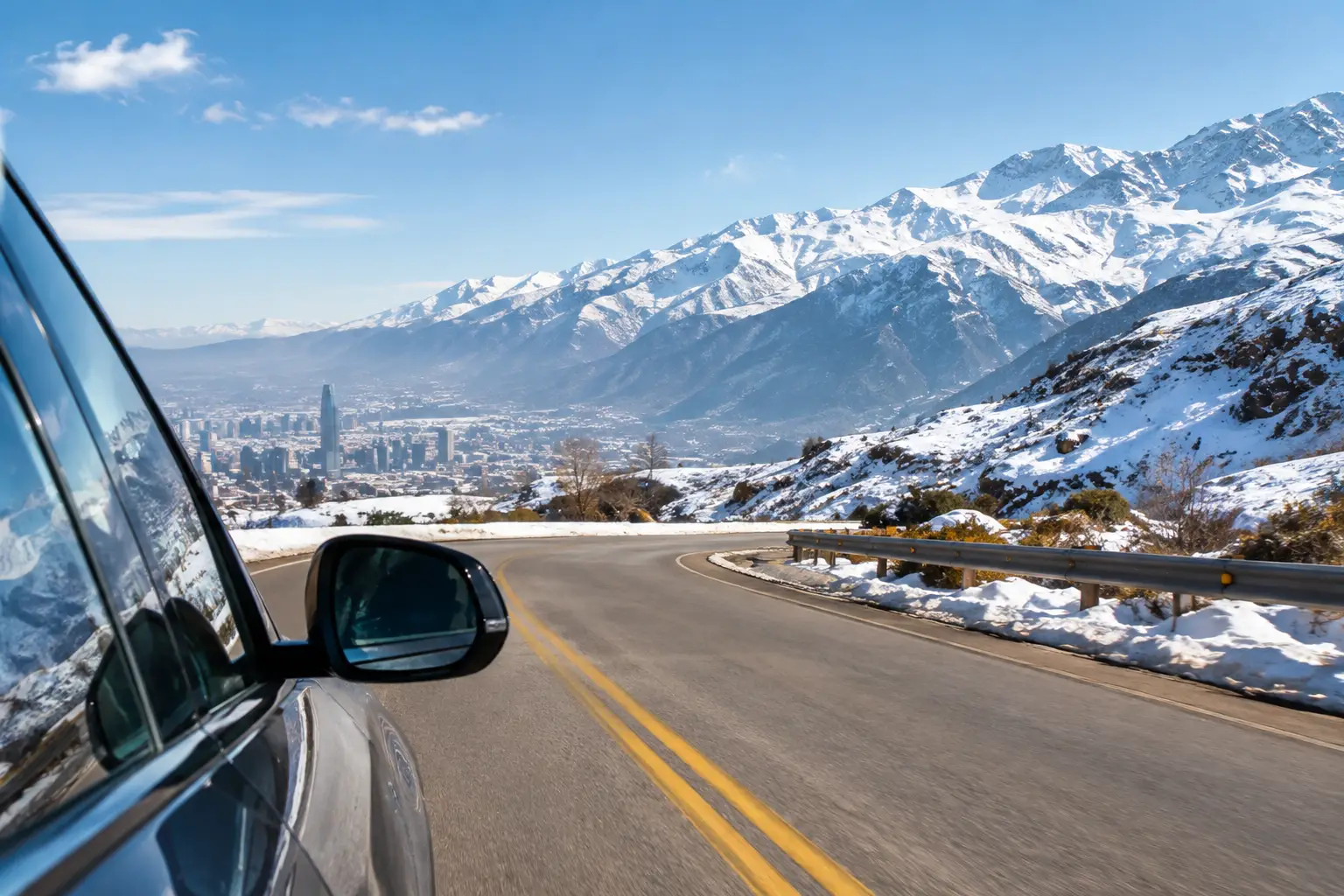
The distance from Santiago to Valle Nevado seems short on the map, but the travel experience is quite different from a typical urban commute. It’s about 46 km from Santiago toward the Andes Mountains, but the climb involves elevation gain, many curves, and conditions that change depending on the weather. For those traveling from Brazil, understanding this route before booking makes all the difference when choosing transportation, schedules, and even accommodations.
The main point is simple: don’t plan this route based solely on the number of kilometers. On a dry morning, the trip can take just over an hour from the eastern part of Santiago. On snowy days, with traffic restrictions or the need to put on snow chains, the same trip can take over two hours. A comfortable itinerary allows for these variations.
Distance from Santiago to Valle Nevado and travel time
Valle Nevado is located in the Farellones region, east of the Chilean capital, high in the Andes. The distance by road is approximately 46 km from Santiago, but the exact starting point affects both the mileage and the duration of the trip.
Those staying in neighborhoods such as Las Condes, Vitacura, or Providencia usually have more direct access to the mountain road. However, departing from the historic center or areas near the airport requires an additional urban drive before reaching the mountain road. From Santiago International Airport to Valle Nevado, generally allow for about 60 to 70 km, depending on the route and pickup location.
| Origin | Approximate Distance | Estimated travel time under good conditions |
|---|---|---|
| Las Condes or Vitacura | 40 to 50 km | 1h15 to 1h45 |
| Providencia | 45 to 55 km | 1h30 to 2h |
| Downtown Santiago | 50 to 60 km | 1h40 to 2h15 |
| Santiago Airport | 60 to 70 km | 2 hours to 2 hours 45 minutes |
These times are estimates, not guaranteed travel times. Heavy snow, wind, limited visibility, roadwork, traffic, and security checks can extend the travel time. Therefore, flights arriving in the late afternoon deserve special attention: traveling up the mountain at night after an international flight can be tiring, especially for families with young children.
Why can 46 km take more than an hour?
The access road is not a straight highway. The ascent follows a mountain road with dozens of sharp curves, steep sections, and a significant gain in elevation. Valle Nevado is over 3,000 meters above sea level, while Santiago is around 500 meters. This difference explains why the trip requires a leisurely pace and careful planning.
For some travelers, the curves are the most challenging part. Those who tend to get carsick should avoid heavy meals right before departure, bring water, and keep any medications recommended by their doctor on hand. Sitting in the front seat of a vehicle, when possible, can also help. Children and sensitive passengers are generally more comfortable in a spacious shuttle than in a small car packed with luggage.
Altitude is another factor. It’s uncommon for a short climb to cause serious problems for healthy visitors, but headaches, fatigue, and mild shortness of breath can occur, especially on the first day. Stay hydrated, cut back on alcohol the night before, and avoid rushing to hit the slopes as soon as you arrive. If you’re staying up in the mountains, a quiet afternoon to acclimate can make your first day on the snow much more enjoyable.
What Changes When It Snows
In winter, Chilean authorities may require snow chains on certain sections of the road. There may also be controlled ascent and descent schedules, especially after snowstorms or when traffic increases. The rules are determined based on the day’s conditions, so don’t assume that yesterday’s requirements will be the same tomorrow.
Drivers with no experience driving in snow or on mountain roads face two risks: not knowing how to install the chains correctly and wasting time trying to figure it out on the shoulder in the cold. Renting a car offers freedom for certain types of travelers, but it requires real-world experience, a suitable vehicle, compatible snow chains, and a willingness to follow mountain advisories.
For most international visitors, organized transportation reduces uncertainty. A driver familiar with the route knows the logistics of the ascent, the stopping points, and the procedures for winter conditions. It’s an especially practical choice for groups, families, people with ski gear, and those who aren’t fluent in Spanish.
Day trip or overnight stay in the mountains?
The answer depends more on the style of the trip than on the distance itself. A day trip from Santiago works well for those who have only a few days, want to combine city and snow, or wish to try skiing without staying at high altitude. In this case, leaving early is essential. Not only will you avoid some of the traffic, but you’ll also get more hours on the slopes and won’t have to rush to make it to lessons or equipment rentals.
Staying in Valle Nevado or nearby offers a different experience. You wake up already in the mountains, have more flexibility in the face of weather changes, and can enjoy the slopes after the day-trippers start heading down. For a trip of three or more nights focused on skiing or snowboarding, this convenience is often a major factor, especially for families and beginner skiers who prefer a pace without daily commutes.
There’s a trade-off between cost and convenience. Santiago offers a wider variety of restaurants, sightseeing options, and city hotels. The mountain, on the other hand, saves travel time and provides more direct access to the snow. A split itinerary, with nights in Santiago before or after your time on the slopes, can be a great option for those who want to experience both sides of a trip to Chile.
How to Organize Your Transportation Without Surprises
The best approach is to first decide where you’ll stay and which days you plan to ski. This makes it easier to choose between a private transfer, shared transportation, or a rental car. Private transfers are recommended when your group values a customized schedule, more space for luggage, and tailored stops. Shared options may be more cost-effective for couples or solo travelers, but they typically follow fixed schedules and may include other passengers.
When booking transportation, confirm in advance the meeting location, luggage limits, whether you can bring skis or a snowboard, child car seats, and the policy for snowy days. If your trip is between June and September, treat the issue of snow chains as a central part of your planning, not as a last-minute detail.
It’s also a good idea to allow some extra time between your flight’s arrival and your departure for the mountains. Immigration, baggage claim, and traffic in Santiago can take longer than expected. Those who arrive early have more peace of mind; those who land late in the day may prefer to spend the first night in the city and head up to the mountains well-rested the next morning.
At ChileanSki, the coordination of lodging, ski days, and transportation ensures that these elements work together seamlessly. This avoids the common scenario of booking a hotel, transportation, and access to the slopes separately, which can result in conflicting schedules or uncertainty about who is providing support at each stage.
Frequently Asked Questions About the Trip
Is it possible to drive from Santiago to Valle Nevado in a regular car?
On dry days, a suitable car can make the trip, provided the driver is confident driving on mountain roads. During the winter, conditions may require snow chains and more driving experience. This route is not recommended for anyone who has never driven in the snow or feels uncomfortable with sharp turns.
What’s the best time to leave Santiago?
For a day trip, it’s best to leave early, before the heaviest traffic, and with enough time to arrive for lessons, pick up your gear, and start the day at a leisurely pace. For guests staying on the mountain, your departure time should take into account traffic regulations and the day’s weather forecast.
Is it possible to visit Valle Nevado without skiing?
Yes. Many visitors go up to see the snow, have lunch, enjoy the scenery, and watch family members on the slopes. Still, it’s recommended to check in advance which areas, restaurants, and activities will be available on the day of your visit, as operations depend on the season and weather.
How much time should you set aside for the entire trip?
For a first-time day trip, plan for a full day, from an early morning departure from Santiago to a return in the late afternoon. To ski at a more leisurely pace, spending two or more nights on the mountain allows you to enjoy the destination without making the drive the main focus of your itinerary.
The mountain range rewards those who come prepared: consider the distance, but place even greater importance on the weather, schedules, and the comfort of each passenger. That way, the journey between Santiago and Valle Nevado ceases to be a concern and becomes a memorable part of your trip to the snow.


