
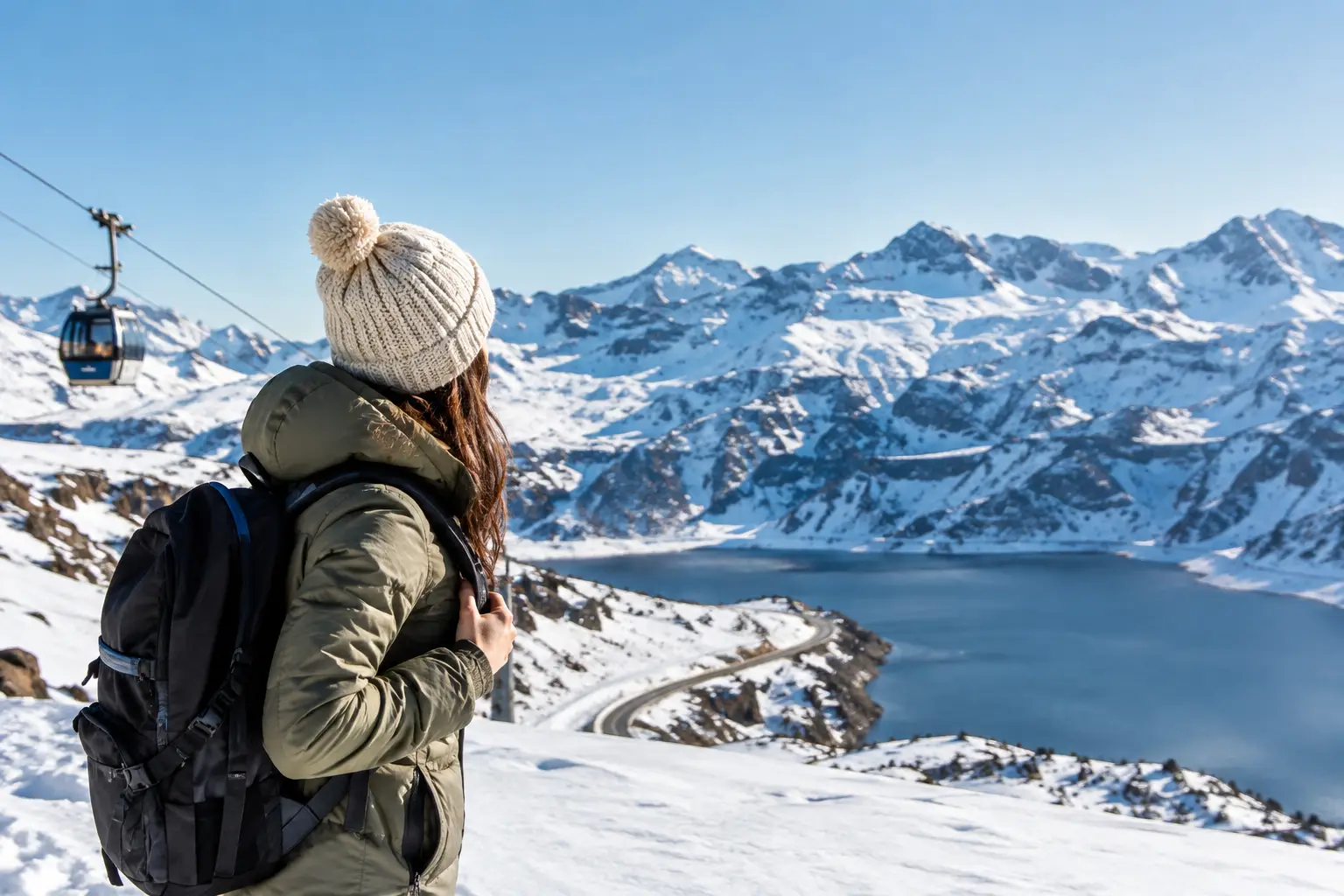
Your first glimpse of the snow-capped Andes usually comes even before you leave Santiago. But knowing how to get to the snow from Santiago requires more than just picking a destination on the map: the mountain roads, the weather, and your departure time will determine whether the day will be smooth or exhausting. For first-time visitors to Chile, planning your transportation in advance is the surest way to enjoy the snow without letting the trip become a source of worry.
The Chilean capital is the main gateway to ski resorts such as Valle Nevado, La Parva, El Colorado, and Farellones. They’re located in the Andes Mountains, about 40 to 60 km from the city, but the short distance doesn’t mean a quick trip. The route involves steep roads, sharp curves, and conditions that change depending on the snow.
How to Get to the Snow from Santiago
There are three main options: a pre-booked transfer, a day trip, or a rental car. The best choice depends on your goal. Those who want to ski, bring their own equipment, and return without worrying about driving usually have a more comfortable experience with a transfer. A day trip, on the other hand, may be a good option for those who just want to experience the snow, take photos, and spend a few hours in the mountains.
A rental car offers independence, but requires real experience driving on mountain roads and attention to local traffic laws. On snowy days, authorities may require snow chains on tires or even restrict access to vehicles without the proper equipment. It’s not a good idea to tackle the climb relying solely on a navigation app.
Shuttle: the most practical option for most travelers
Private or shared transfers depart from hotels in Santiago, the airport, or designated pickup points, depending on the service. The driver knows the route, monitors road conditions, and usually knows how to handle situations involving snow chain checks or changes in access.
For families with children, groups of friends, and travelers who don’t speak Spanish, this predictability makes all the difference. It also spares you the hassle of driving early in the morning, parking at high altitudes, and returning to the city after a full day of activities in the snow.
It’s worth confirming before booking whether the transportation includes luggage, ski or snowboard gear, a child seat when needed, and the return time. On a day trip, a few minutes’ delay in departure can mean encountering more traffic on the way up.
Snow-viewing tour: great for those who aren’t going to ski
Scenic tours are generally designed for visitors who want to see snow, play in designated areas, and explore the mountain range’s landscape. They may include stops in Farellones or the surrounding area, but they are no substitute for a program tailored to those who want to enjoy the slopes, lessons, and lifts.
The difference is important: a tour may have limited time on the mountain and follow a group itinerary, while a ski trip requires flexibility to pick up equipment, attend lessons, and use the ski resort at your own pace. If your priority is skiing or snowboarding, choose transportation that aligns with the slopes’ operating hours.
Rental Car: Freedom with Responsibilities
Renting a car can be a good option for those who want to plan a flexible itinerary or stay overnight on the mountain. Still, in winter, it’s important to carefully evaluate the rental company, insurance coverage, and requirements for driving in snowy conditions.
The route to the ski resorts in the Santiago region includes dozens of uphill curves. Even in dry conditions, it demands your full attention. With snow, ice, fog, or heavy traffic, the experience changes completely. Snow chains must be installed correctly, and on some days, their use may be mandatory. If you’ve never driven on a snowy road, a shuttle service usually offers a much better balance of comfort, safety, and peace of mind.
How long does it take to get from Santiago to the snow?
Under normal conditions, the drive to Farellones, El Colorado, La Parva, or Valle Nevado usually takes between 1 hour and 30 minutes and 2 hours and 30 minutes from central areas of Santiago. On weekends, holidays, and days following a heavy snowfall, travel time can increase considerably.
The road may have temporary closures to manage traffic flow. That’s why leaving early isn’t an exaggeration—it’s a decision that helps you enjoy more hours on the mountain. For a day of skiing, many travelers leave Santiago before 7:00 a.m. Those staying at a mountain resort avoid this daily commute and gain more time to rest, take lessons, or enjoy the common areas.
| Mode of Transportation | Best for | Main advantage | Precautions |
|---|---|---|---|
| Private transfer | Families, couples, and groups | More personalized schedules and logistics | Book in advance during peak season |
| Shared transfer | Travelers looking for convenience | Shared cost and a professional driver | Fixed schedules and possible stops |
| Panoramic tour | For those who want to experience the snow | A simple itinerary for a first visit | Limited time for skiing |
| Rental car | Experienced drivers and extended stays | Itinerary flexibility | Snow chains, insurance, and driving in the mountains |
Which ski resort should you choose when leaving Santiago?
For a first experience with snow, Farellones is usually an affordable choice since it’s located along the same route as the region’s main resorts and offers activities for non-skiers as well. El Colorado is an interesting option for groups with varying skill levels, while La Parva appeals to those seeking a mountain atmosphere and good slopes to improve their skiing.
Valle Nevado is usually a top choice for those seeking a more complete resort experience, with lodging, mountain facilities, and access to a large skiable area. The decision shouldn’t be based solely on which place looks best in photos. Consider how many days you’ll have in Chile, whether you plan to take lessons, the ages of the children, the need to rent clothing, and whether you’d prefer to stay in Santiago or spend the night in the Andes.
Portillo is also accessible from Santiago, but it’s on a different route, further north, and usually requires specific planning for transportation and lodging. For a short trip based in the capital, the resorts in the Farellones region are generally the easiest for a day trip.
When does it snow near Santiago?
The ski season in the Chilean Andes usually runs from June to September, with the possibility of an extension depending on snowfall and trail conditions. July and August are typically the busiest months, especially during Brazilian school vacations.
Even during peak season, snowfall and road conditions vary. A trip scheduled for July may feature sunny days and well-groomed slopes, while a heavy snowfall could disrupt lift schedules. There is no reliable guarantee of snow on a specific date. What you can do is plan ahead: keep track of the season, book flexible services whenever possible, and don’t leave transportation arrangements to the last minute.
If your main goal is to see snow, plan to spend at least two days in the Santiago area. This buffer reduces the impact of weather changes and allows you to choose the best day to head up the mountain.
What to Pack for a Day in the Snow
The mountains require more than just a heavy coat. The combination of cold, wind, strong sun, and altitude calls for appropriate layered clothing. A thermal layer next to your skin, a mid-layer for warmth, and a waterproof jacket help keep you comfortable throughout the day.
Waterproof gloves, UV-protective sunglasses, sunscreen, lip balm, and appropriate socks are also essential. The sun reflects very intensely off the snow, even on cloudy days. For those going skiing, helmets and technical gear can be rented at your destination, but it’s worth checking availability and making reservations during peak periods.
Bring water and eat light meals. Altitude can cause fatigue, headaches, or shortness of breath in some people, especially during a rapid ascent. Get plenty of rest, avoid drinking too much alcohol the night before, and let your travel companion know if you’re not feeling well.
Frequently Asked Questions About Traveling to the Snow from Santiago
Is it possible to go and return on the same day?
Yes. It’s possible to take a day trip to the ski resorts near Santiago, as long as you leave early and road conditions permit. For those who want to ski for several days or are traveling with young children, staying overnight in the mountains may be more comfortable.
Do I need snow chains to drive there?
On days with snow or ice, authorities may require their use on mountain roads. Check with the rental company to confirm whether snow chains are included, if the vehicle is suitable, and if you know how to install them. Without them, don’t rely on the car as your only option.
Is it possible to enjoy the snow without knowing how to ski?
Yes. There are areas and activities for visitors with no skiing or snowboarding experience. Still, choose an itinerary that clearly outlines how much time will be spent in the mountains and which attractions will be available that day.
Getting to the snow from Santiago is simple when transportation, destination, and the pace of the trip are planned together. With a well-organized trip, appropriate clothing, and enough time to spend on the mountain, the Andes cease to be just a landscape seen from the city and become one of the most memorable parts of your trip to Chile.


