
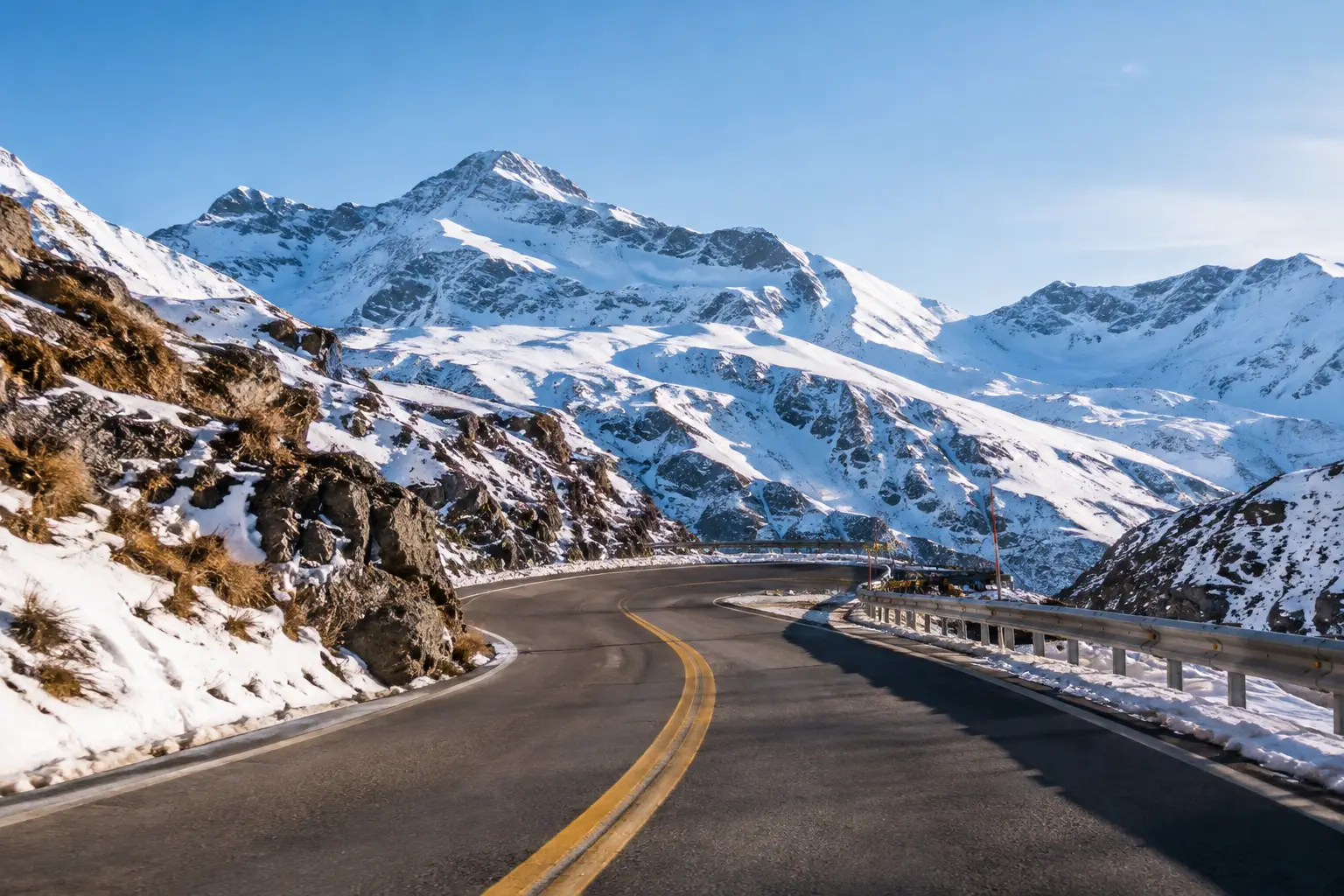
The road isn’t just the path to the snow—it’s part of the experience of reaching the Andes. Understanding how the road to Valle Nevado works helps you determine your departure time, the type of transportation, and, most importantly, what to expect for a peaceful day in the mountains. For those leaving from Santiago, the route combines urban highways, mountain climbs, sharp curves, and conditions that change depending on the weather.
The good news is that the trip is entirely manageable for international visitors and is operated daily during the season by experienced drivers. The difference between a comfortable arrival and a stressful morning usually comes down to planning: keeping an eye on road conditions, obeying traffic controls, and not treating the climb as just an ordinary car ride.
How the Road to Valle Nevado Works in Practice
The main access route leaves Santiago toward the Farellones region via Route G-21. The distance seems short on the map, but travel time varies greatly due to altitude, weekend traffic, and, above all, snow. Under normal conditions, the drive from central Santiago usually takes between 1 hour and 30 minutes and 2 hours and 30 minutes. After a snowstorm or on days of high demand, this time may increase.
The final stretch is the one that requires the most attention. The road climbs the Andes Mountains through a series of tight, steep curves, known locally by their numbers. This route is not suitable for inexperienced drivers, especially those who have never driven in the mountains, are visiting Chile for the first time, or lack experience driving on ice and snow.
During peak season, it’s common to encounter traffic control along the route. Authorities may implement time-based restrictions to manage traffic flow, separate ascending and descending traffic during certain periods, or temporarily halt traffic. These measures do not follow a fixed schedule for every day: they depend on the weather forecast, snow accumulation, snow removal efforts, and road safety.
What Changes When It Snows
Fresh snow is great news for skiers, but it can also disrupt road conditions. With heavy snowfall, low visibility, or ice on the road, the ascent may require snow chains, appropriate vehicles, and a longer travel time. In severe conditions, access may be restricted until crews clear the road.
That’s why you shouldn’t base your decision solely on the forecast for Santiago. The capital may wake up dry and sunny, while the mountains experience snow, wind, and sub-zero temperatures. The most important factor is always the condition of the road and the ski resort on that particular day.
Rental car or shuttle: which option makes the most sense?
Driving offers flexibility, but it isn’t automatically the simplest option. For families with children, groups with ski gear, or travelers with no experience driving on mountain roads, a shuttle service usually greatly reduces stress. The driver is familiar with the controls, the curves, the stops, and the procedures in case of changing weather conditions.
The comparison below helps you assess what matters most for your trip.
| Criterion | Rental Car | Coordinated Transfer |
|---|---|---|
| Freedom of schedule | Greater, subject to road restrictions | Determined at the time of booking and adjusted to conditions on the day |
| Driving in the snow | Requires experience and the right equipment | Responsibility of a trained driver |
| Snow chains | May be mandatory and must be installed correctly | Usually included in the vehicle’s standard equipment |
| Cost for groups | May be worth it, depending on the number of passengers | Can be cost-effective when split among travelers |
| Rest stops along the way | The driver stays focused on the road | Everyone can enjoy the scenery and relax |
Those who choose to drive should confirm in advance whether the rental company authorizes use in mountainous areas, what insurance coverage applies, and whether snow chains are included or available. A standard vehicle without the necessary equipment may be stopped at a safety checkpoint and prevented from continuing. It’s also advisable to avoid leaving late: driving down in the dark after a full day of skiing requires even greater concentration.
A shuttle service, on the other hand, is especially convenient for those staying in Santiago who plan to make a day trip, or for those heading directly to their mountain hotel. In both cases, the pickup location, luggage, and equipment must be specified at the time of booking so that the vehicle can be sized appropriately.
Schedules, traffic controls, and why leaving early makes a difference
The road may operate with traffic windows on specific days, especially when there is heavy traffic. At times, uphill traffic is given priority in the morning, and downhill traffic is allowed later in the day. However, schedules may change without ample notice, depending on operational decisions and weather conditions.
The safest advice is to confirm the situation the day before and again on the morning of your trip. If you’re on a shuttle, follow the schedule provided by the operations team. Arriving late could mean missing the best time slot for the ascent or facing a longer line at the base of the mountain.
Leaving early also enhances your experience at the destination. You’ll arrive with more time to pick up your gear, organize lessons, grab a coffee, and enjoy the slopes right from the start. For guests staying at the mountain, arriving early avoids having to check in under pressure in case the weather worsens as the day goes on.
What to Bring for the Ascent of the Andes
Even when the road is clear and you have a suitable vehicle, the mountain requires preparation. Inside the vehicle, keep water, a snack, a portable charger for your cell phone, and a warm layer of clothing within easy reach. Sunglasses and sunscreen are also useful: the glare from the snow can be intense, even on cold days.
If you’re traveling with children, pack coats, gloves, and appropriate footwear separately, keeping them within easy reach rather than buried at the bottom of hard-to-reach suitcases. For those sensitive to altitude, staying hydrated, eating light meals, and ascending at a leisurely pace can help. Valle Nevado is at a high altitude, and some people may experience headaches, fatigue, or shortness of breath during the first few hours.
Don’t count on constant cell phone service everywhere. Download documents, reservation confirmations, and important information before leaving Santiago. This also prevents you from having to rely on the internet to locate the transfer meeting point or communicate a last-minute change.
Precautions to Avoid Problems on the Road
The main rule is simple: don’t push the mountain’s limits. If snow chains are required, put them on. If the road is closed, wait for it to reopen. And if the forecast calls for a significant snowstorm, be prepared to adjust your itinerary.
Also, avoid stopping in unauthorized spots to take photos. The scenery is breathtaking, but narrow shoulders, low visibility, and moving traffic make some stops unsafe. Drivers should keep their distance, slow down, and never rely solely on navigation apps to assess road hazards.
For travelers who want to prioritize comfort, booking lodging in the mountains reduces the need to hit the road every day. For those who prefer the energy of Santiago and plan to spend one or more days skiing, a well-planned transportation arrangement offers predictability without sacrificing the Andean experience. The team at ChileanSki.com can help you find the best combination of lodging, transportation, and days on the slopes based on the specifics of your trip.
Frequently Asked Questions About the Road to Valle Nevado
Do I need to use snow chains to get to Valle Nevado?
It depends on road conditions. On dry days, they may not be necessary. In the event of snow or ice, the responsible authority may require snow chains, and vehicles without them may not be allowed to proceed. This requirement should be confirmed close to the travel date.
Is it safe to drive to Valle Nevado?
Yes, provided the vehicle is properly equipped, the driver has experience driving in mountainous and snowy conditions, and traffic rules are followed. For drivers without this experience, a shuttle service is usually the most comfortable and safe option.
How long does it take to get from Santiago to Valle Nevado?
Generally, between 1 hour 30 minutes and 2 hours 30 minutes, but the travel time may increase due to snow, traffic controls, traffic jams, and heavier traffic on weekends. Avoid scheduling tight appointments immediately after arrival.
Can I take a taxi or ride-hailing service?
This isn’t the most reliable option. Not all drivers are willing to take this route, have experience with the road, or have the necessary snow equipment. To avoid cancellations and vehicle incompatibility, opt for transportation booked in advance.
The road to Valle Nevado rewards those who are prepared: with the right transportation, appropriate clothing, and plenty of time to spare, the drive up ceases to be a concern and becomes the first highlight of your trip to the Andes.


